Posts tagged ‘crohn’s’
Transplant for patients with severe Crohn’s?
Over the past few months, I’ve written posts about all sorts of new treatments being studied for IBD- bone marrow transplants and whipworms to name a few. Those sounded a little crazy to me but definitely intriguing. However, a new study published by the University of Pittsburgh Medical Center suggests that intestinal or multivisceral (three or more abdominal organs) transplants are effective treatments for patients with Crohn’s so severe that they no longer tolerate an IV nutrition.
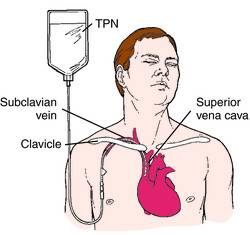
As we all know, when Crohn’s is severe, its hard to absorb nutrients or even eat. For those who have irreversible intestinal failure, they may need to receive nutrition through a tube intravenously, known as total perenteral nutrition. According to the study, those who do not tolerate the IV nutrition are often referred for an intestinal transplant.
New Site Feature!
Today, I launched a new feature to Caring for Crohn’s- a listing of IBD specialists across the country. There is now a tab on the menu on the top of the page that reads “IBD Doctors“. If you click on that, you can view doctor listings by each state.
Some states do not have doctors listed- that is because I used U.S. News & World Reports rankings of Top Doctors and there weren’t any listed for that state. However, that doesn’t mean there aren’t any great IBD doctors in that state!
If you know of any that aren’t listed, please email me at caringforcrohns@gmail.com.
There is nothing more important that having a doctor who is extremely knowledgeable in IBD and is helpful and listens to your concerns. I hope you find this new page helpful!
The ABC’s of Crohn’s & UC: “L”
My heart is still heavy from the Newtown shooting in my home state but I wanted to go back to the real reason why I blog: to educate people and raise awareness about Crohn’s and Ulcerative Colitis.
Tonight’s post is the next installment in the ABC’s of Crohn’s and UC series- the letter L.

More genes identified for Crohn’s Disease
Last week, I wrote about Crohn’s Disease and genetics. Now, a week later, a new study identified even more genes that could be linked to Crohn’s Disease, bringing the total number of genes associated with the disease from 163 to more than 200!

Scientists at University College London recently came up with a new method for identifying genes for complex diseases, like Crohn’s. In doing so, they were able to identify more than 200 genes associated with Crohn’s- more than have been found for any other known disease.
Here’s an interesting quote about the study from an article from Science Daily.
Dr Nikolas Maniatis, senior author from the UCL Research Department of Genetics, Evolution and Environment, said: “The discovery of so many gene locations for Crohn’s Disease is an important step forward in understanding the disease, which has a very complicated genetic basis. We hope that the method we have used here can be used to identify the genes involved in other diseases which are similarly complex, for example different cancers and diabetes.”
Doctors typically don’t do genetic testing for Crohn’s or UC, unless its for research purposes, since the link is still so widely debated. However, with more and more genes being discovered, I wonder if more patients will be genetically tested for the diseases.
Right now, Prometheus, a diagnostic testing company, has a NOD2/CARD15 that is used to identify genes in Crohn’s patients. According to the company’s website,
“…is a test to evaluate certain genetic variants for patients diagnosed with Crohn’s disease. Detection of one or more NOD2/CARD15 genetic mutations suggests a risk of having more severe symptoms and complications of the disease. This testis used to help establish a prognosis that may help guide treatment decisions by you and your doctor.”
The same company also has an IBD diagnostic test that uses serologic, genetic, and inflammation markers for diagnostic clarity. This test, IBD sgi Diagnostic, is supposed to help doctors differentiate between IBD and non-IBD and Crohn’s Disease and UC in one blood test.
The idea of genetic testing for Crohn’s and UC is extremely interesting. I look forward to the day when a test is developed that shows the likelihood of passing IBD along from parent to child.
Huffington Post: Why I Celebrated Crohn’s & Colitis Awareness Week
In the excitement of Crohn’s & Colitis Awareness Week and the #PurpleChallenge, I completely forgot to share with you my exciting news- I wrote another piece on Crohn’s for HuffingtonPost.com!

In case you missed it, in August, I wrote a piece for the Huffington Post on what it’s like to be a caretaker for someone with Crohn’s Disease. After writing that and the great feedback I got from those who read it, I knew I wanted to write another piece sometime soon. After racking my brain I realized my next topic was right in front of me- why I celebrate Crohn’s & Colitis Awareness Week.
Here’s an excerpt of my post:
Six years ago, I had not heard of Crohn’s disease or ulcerative colitis. I lived in a world where I was blissfully unaware of inflammatory bowel diseases, where the debilitating symptoms didn’t impact my life. Then I met my now-husband Dan, and everything changed.
Dan was diagnosed with Crohn’s disease just two weeks after we started dating in 2007. Now, six years later, we have been through the gamut with the disease. He’s been on three different medications, with one of them making it nearly impossible for him to function because of severe fatigue. Now, instead of taking oral medication, Dan receives an IV infusion every six weeks at the doctor’s office. He’s had three different gastroenterologists. He’s been hospitalized for a post-colonoscopy infection and an intestinal blockage. Most recently, he had part of his small intestines removed in order to treat the disease.
Check out the full post here.
Medical Marijuana for Crohn’s & UC
I happen to live in a state that recently legalized medical marijuana, so this post has been on my mind for awhile. Medical marijuana is a controversial topic- some people are extremely in favor of the use of the drug to help treat nausea, vomiting, and pain. This post is neither to promote the use of medical marijuana nor prohibit it- its just one that looks into its efficacy as a possible treatment for IBD.

The ABC’s of Crohn’s & UC: “J” & “K”
It’s been a few weeks since I did an installation in my ABC’s of Crohn’s & UC series. With other topics arising and Crohn’s & Colitis Awareness Week occurring, it’s fallen off my radar. So here is the next installation, and it will be a short one: J and K.

Jejunoileitis: One of the types of Crohn’s Disease. Jejunoileitis affects the jejunum (see below). Symptoms include cramps after meals, fistulas, diarrhea, and abdominal pain. Kind of sounds like all the other types of Crohn’s.
Jejunum: The upper half of the small intestines.

J-Pouch: One name for an ileo-anal pouch. The J-Pouch is an internal reservoir where the rectum would be. A J-Pouch is traditionally done through a multi-part surgery. The first surgery involves the removal of the large intestines and rectum and the fashioning of the pouch. At the end of the first surgery, the patient is given a temporary ileostomy in order to give the pouch time to heal. After a period of time (typically 6-12 weeks), a second surgery is performed known as the “take down” in which the ileostomy is reversed.

Kidney Stones: One of the most common kidney complications in Crohn’s patients. According to CCFA, kidney stones are common in patients who has Crohn’s in the small intestines because of fat malabsorption. You are at a higher risk for kidney stones if you’ve had a number of bowel resections because you are more prone to dehydration. Symptoms of kidney stones include sharp pain (particularly in your lower back), nausea, vomiting, and blood in the urine. Treatment calls for an increased fluid intake and a diet that is rich in juices and vegetables. If you are unable to pass the kidney stones on your own, you may have to have them removed which is through a simple procedure.

Kock Pouch: A Kock Pouch is an internal pouch formed by the terminal ileum after a colectomy. The pouch has a large volume so that feces can be stored temporarily without the need for a stoma bag. A Kock Pouch may be created if the patient cannot have an ileo-anal pouch or who develop incontinence after an ileo-anal pouch.
Carrie Johnson: three time Olympian & Crohn’s patient
I was approached earlier this week by Crohn’s & Me to see if I was interested in interviewing any national advocates for Crohn’s and Colitis Awareness Week. I jumped at the opportunity. But never in my wildest dreams did I think I would be interviewing three-time Olympic sprint kayaker Carrie Johnson.

I wrote briefly about Carrie prior to the Olympics. However, there is so much more to her story that I learned after talking with her for 30 minutes. So here is Carrie’s Crohn’s story, as told to me.
Purple Challenge Day 7 Photos!
Today is the final day of Crohn’s & Colitis Awareness Week and the last day of the Purple Challenge.
The sheer number of people who participated in our Purple Challenge is unbelievable and shows how many folks IBD impacts internationally.
That being said, thank you to everyone who participated in the challenge by tweeting and/or Facebooking photos!
However, just because the challenge ends tonight doesn’t mean you should stop wearing purple to raise awareness about Crohn’s Disease and Ulcerative Colitis.
Here are some pictures from Day 7!

I’m rocking purple jeans for Day 7
IBD & Genes: A confusing relationship
In a recent post about IBD myths, I talked about how while there is some genetic relationship with IBD, there is no one gene that can be tied to the diseases. Today’s post is about how wrong I was about that!

I did a little digging around about genes associated with IBD and found some pretty interesting information. So here is my attempt to digest the extremely scientific information into something concise and understandable (and please forgive me if I get some of it wrong or if my explanation is confusing!).
Last month, researchers at the National Institutes of Health discovered 71 new genes associated with bowel diseases. That brings the number of genes associated with IBD up to 163. That is a whole lot of genes associated with these diseases- way more than I imagined there would be.
It’s important to note that while these genes are associated with IBD, it does not mean that if you have one of these genes, you will develop the disease. What it means is that you have an increased risk of developing Crohn’s or UC.
For this study, DNA samples were taken from people with Crohn’s Disease (20,076), Ulcerative Colitis (15,307), and people without either disease (25,445) from 15 countries. These samples were analyzed and showed the 71 genes that are associated with Crohn’s and UC.
Of the 163 genes now associated with IBD, 110 are associated with Crohn’s Disease and Ulcerative Colitis. Thirty genes are specific to Crohn’s Disease and 23 are specific to Ulcerative Colitis.
 Caring for Crohn's & UC